
 Over 30+ Years of Experience

There’s a moment in every home renovation or redecorating project where you come across a window or opening that simply doesn’t suit a standard treatment. Maybe it’s a wide sliding glass door that leads to the backyard. Maybe it’s a large picture window with no room on either side for panels to stack back. Or perhaps it’s a room divider opening where you want the flexibility to open up or close off the space depending on the occasion. Whatever the situation, sliding shutter doors have a way of solving problems that other window treatments can’t — and doing it with a level of style that instantly elevates the space.
What Are Sliding Shutter Doors?
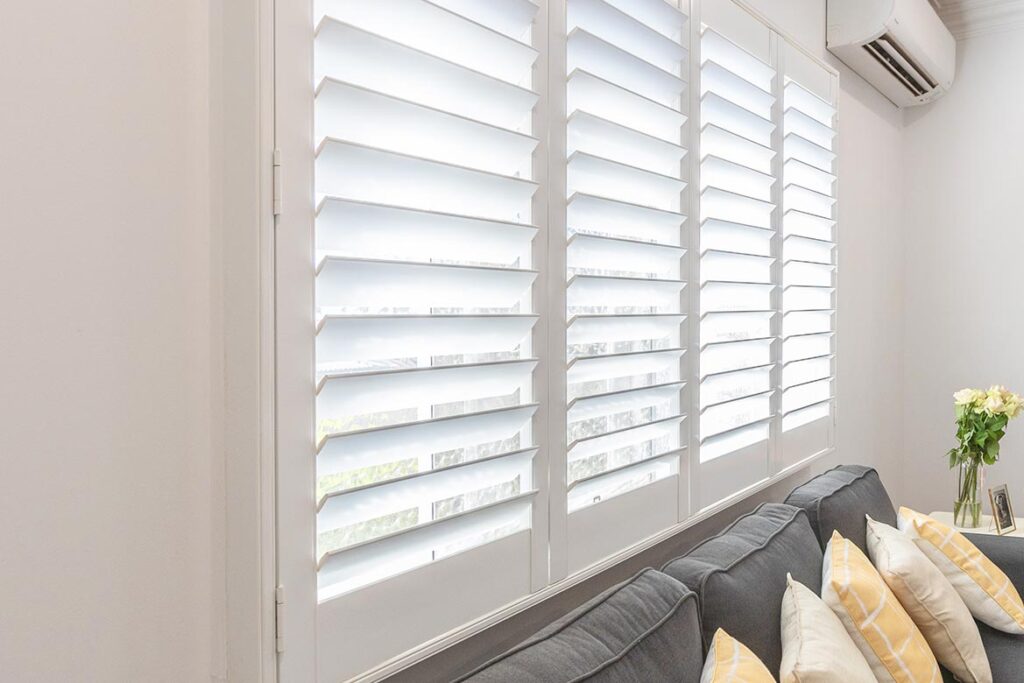
Sliding shutter doors are plantation shutter panels mounted on a track system that allows them to slide horizontally across a window or opening rather than swinging open on hinges like traditional shutters. The panels glide smoothly along the track, stacking neatly to one or both sides when open and covering the entire opening when closed. The result is a clean, contemporary look that works beautifully across a wide range of architectural styles — from sleek modern homes to classic heritage properties.
Unlike hinged shutters, sliding shutters don’t require clearance space in front of the window for the panels to swing open. This makes them an ideal solution for windows and doors in tighter spaces, rooms with furniture positioned close to the window, or any opening where a swinging panel would be impractical.
Why Are Homeowners Choosing Sliding Shutter Doors?
The growing popularity of sliding shutter doors reflects a shift in how people think about the relationship between indoor and outdoor living. As open-plan layouts, large glazed doors, and indoor-outdoor flow have become defining features of contemporary home design, the need for window treatments that can handle wide, expansive openings without looking clunky or feeling restrictive has grown significantly.
Curtains on wide sliding doors tend to look heavy and dated. Roller blinds can work but lack the architectural presence and light control precision that most homeowners want. Sliding shutter doors fill that gap perfectly — they’re elegant, functional, and proportionally suited to large openings in a way that no fabric treatment can match.
There’s also a practical dimension to the popularity surge. Sliding shutter doors are exceptionally low maintenance, incredibly durable, and offer the same precise louvre control as any plantation shutter — meaning you can fine-tune light and privacy throughout the day without fully opening or closing the panels. For families with young children or pets, the absence of cords, chains, or dangling fabric is a significant safety and convenience advantage.
The Best Applications for Sliding Shutter Doors
Sliding shutter doors work across a surprisingly wide range of applications, and once you start thinking about them, you’ll likely spot several places in your own home where they’d be perfect.
Sliding glass doors and stacker doors leading to outdoor entertaining areas are the most common application. These openings are typically wide — often two, three, or even four metres across — and need a treatment that can cover the full span without looking awkward or requiring excessive wall space for stacking. Sliding shutter panels handle these openings beautifully, moving smoothly along the track and tucking away neatly when you want the full opening clear.
Large picture windows and floor-to-ceiling glazing are another natural fit. A single wide panel or a set of sliding panels across a large window creates a dramatic, architectural statement that becomes a feature of the room rather than just a functional covering.
Room dividers and internal openings between spaces are a less obvious but equally compelling use case. A set of sliding shutter panels across a wide internal opening gives you the flexibility to open the space up for entertaining or create a more intimate, separated feel when needed — all while maintaining a consistent design aesthetic throughout the home.
Choosing the Right Material for Sliding Shutters
Because sliding shutter panels are larger and heavier than standard hinged panels — and because they’re often used in areas with significant sun exposure or outdoor connection — material selection is particularly important.
PVC plantation shutters are an excellent choice for sliding shutter door applications. Their resistance to moisture, UV exposure, warping, and fading makes them ideally suited to large panels that face direct sunlight or are positioned near outdoor areas where humidity and weather are a factor. PVC is also lightweight relative to its strength, which matters for sliding panels — lighter panels move more smoothly along the track and place less stress on the hardware over time.
The low maintenance requirements of PVC are a bonus in high-use areas like sliding door openings. A simple wipe with a damp cloth is all that’s needed to keep them looking pristine — no sanding, repainting, or sealing required regardless of the conditions they’re exposed to.
Getting the Track and Hardware Right
The track system is what makes sliding shutters work, and it’s worth understanding the basics before you order. Most sliding shutter systems use either a top-hung track — where the panels hang from a rail mounted at the top of the opening — or a combination of top track and bottom guide that keeps the panels stable and aligned as they move.
Top-hung systems are generally preferred for larger, heavier panels as they distribute the weight through the ceiling or lintel rather than relying on a floor track. They also keep the floor clear, which looks cleaner and makes it easier to sweep or vacuum beneath the panels.
Correct track installation is critical to smooth, long-term operation. The track must be perfectly level and securely anchored to ensure the panels glide without binding or tilting. Taking the time to install the track correctly at the start will save a significant amount of frustration and adjustment later.
Most Homeowners Are Making the Switch
Most homeowners across a wide range of property types and styles have embraced sliding shutters as a way to add a polished, considered finish to everything from small apartment balcony doors to sweeping open-plan living areas with full-width glazing. Whether it’s a Federation terrace, a mid-century bungalow, or a sleek contemporary build, the right shutter solution exists for every home. The versatility of the sliding configuration, combined with the timeless appeal of the plantation shutter aesthetic, makes them a natural fit for any architectural style.
Is Installing Sliding Shutters a Good DIY Project?
Sliding shutter door installation is absolutely achievable as a DIY project, though it does require a bit more planning and precision than a standard hinged shutter installation. The track mounting in particular needs careful attention — getting the level right and ensuring the anchoring is solid is the foundation everything else depends on.
Once the track is correctly installed, hanging the panels and adjusting the guides is a straightforward process. Most quality DIY shutter suppliers provide detailed installation instructions, and their support teams are available to walk you through any questions that come up along the way. Our tips, how-to guides, and real-world inspiration cover sliding shutter installations in practical detail, making it easier to approach the project with clarity and confidence from the very first step.
Measuring for Sliding Shutter Doors
Accurate measurement is the most critical part of any sliding shutter project, and it’s worth taking extra care with wide openings where small errors get multiplied across multiple panels. Measure the full width of the opening at the top, middle, and bottom, and use the smallest measurement as your reference. Measure the height at the left, centre, and right, again using the smallest figure.
For sliding doors specifically, factor in the track height when calculating your panel dimensions — the track itself takes up space at the top of the opening, which reduces the available height for the panel. Your supplier will guide you through the correct deductions to apply, but always double-check before confirming your order.
The Bottom Line
Sliding shutter doors are one of the most versatile, elegant, and practical window treatment solutions available for wide openings, large glazed areas, and spaces where standard hinged shutters simply won’t work. They bring the same timeless aesthetic and precise light control of traditional plantation shutters to applications that other treatments can’t handle — and they do it with a clean, architectural confidence that makes any room feel more considered and complete.
Whether you’re updating a sliding glass door, transforming a wide picture window, or creating a flexible room divider, sliding shutters are a solution worth exploring seriously. Get a free quote today and find out how sliding shutter doors could work in your home.