
 Over 30+ Years of Experience

There’s something undeniably romantic about French doors. The way they frame a garden, open a room to a balcony, or connect an indoor living space to the outdoors — they bring light, airiness, and a sense of occasion to any home. But as beautiful as French doors are, they come with a window treatment challenge that stumps a lot of homeowners. How do you dress them properly? How do you get privacy when you need it without blocking the light and the view that made you fall in love with the doors in the first place?
The answer, for a growing number of homeowners around the world, is plantation shutters — and specifically, shutters designed and configured to work with the unique demands of French door installations.
Why French Doors Are Tricky to Dress
Standard window treatments simply don’t translate well to French doors. Curtains get caught in the door mechanism, bunch awkwardly when the doors are open, and require enough wall space on either side to stack back — something that isn’t always available. Roller blinds mounted on each door panel can work, but they tend to look utilitarian rather than elegant, and the cords or chains can become a nuisance every time the doors are used.
The fundamental challenge is that French doors are both a window and a door at the same time. Any treatment you choose needs to look good, control light effectively, provide privacy when needed, and — critically — not interfere with the operation of the doors themselves. It’s a surprisingly demanding brief, and most standard window treatments fall short on at least one of those requirements.
How Plantation Shutters Solve the French Door Problem
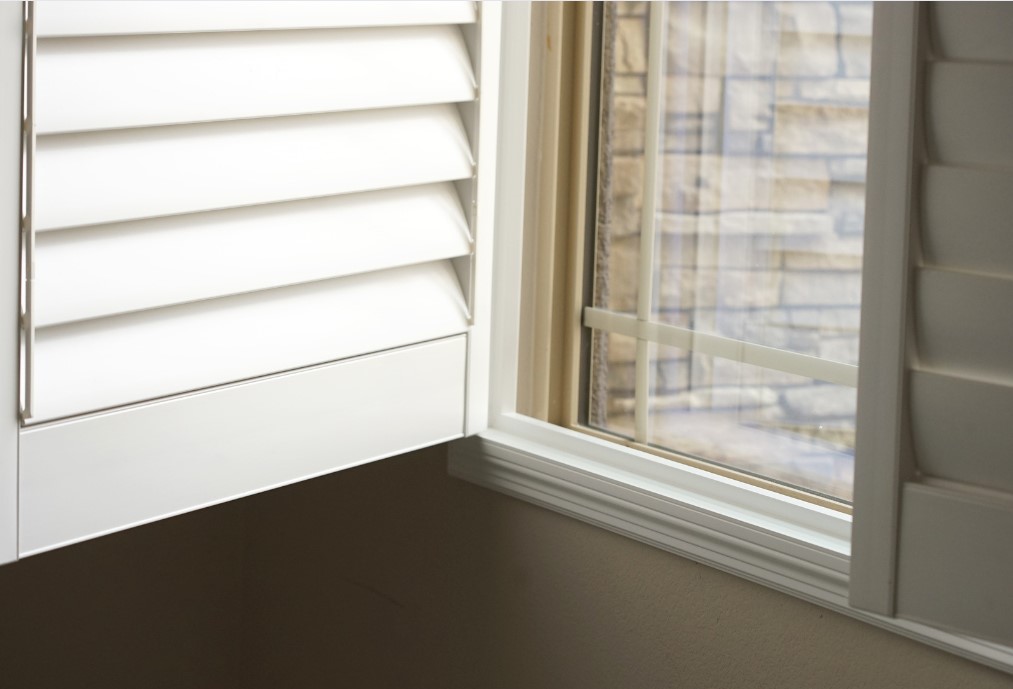
Plantation shutters are uniquely well suited to French doors because they mount directly onto the door panel itself rather than to the surrounding wall or architrave. Each door gets its own shutter panel — hinged within a slim frame that attaches cleanly to the door — so the shutters move with the door when it opens and closes. There’s no bunching, no cords dangling across the doorway, and no awkward stacking to one side.
When the doors are closed, the shutters provide complete privacy and light control with the same elegance you’d expect from any quality plantation shutter installation. When the doors are open, the shutters simply fold back with them — completely out of the way, looking intentional and polished rather than improvised.
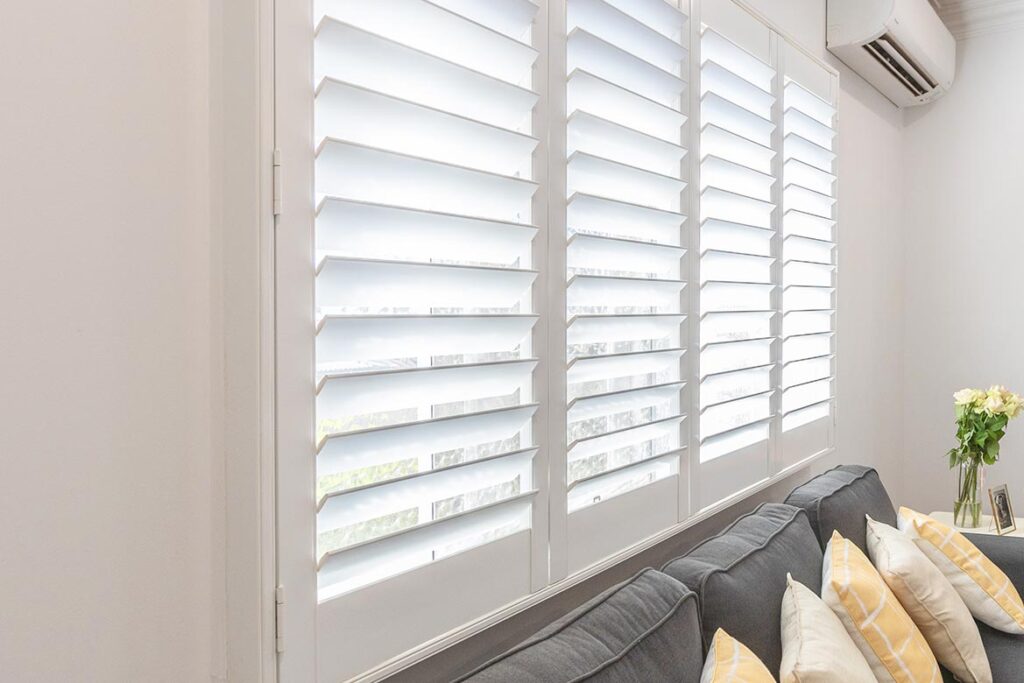
The louvre blades add another layer of functionality that no other French door treatment can match. On a bright afternoon, you can angle the blades to filter the light without closing the shutters entirely, creating a beautiful dappled effect inside the room while maintaining airflow through the door. It’s the kind of versatility that makes plantation shutters genuinely useful every single day rather than just something you open and close once.
The Best Shutter Material for French Doors
French doors are typically exposed to more direct handling than windows — they’re touched, pushed, pulled, and leaned against regularly. This makes material choice particularly important. You want a shutter that can withstand daily physical contact, resist moisture if the doors open onto an outdoor area, and maintain its appearance without requiring constant maintenance.
PVC plantation shutters are an outstanding choice for French door applications. They’re completely moisture-resistant — ideal for doors that open onto a garden, pool area, or balcony where rain, humidity, and outdoor conditions are a factor. They’re also highly durable, easy to wipe clean, and resistant to warping, cracking, and fading, meaning they’ll look just as sharp in ten years as they do on installation day. For a door that gets used multiple times a day, every day, that kind of resilience matters enormously.
Café Style Shutters on French Doors — A Clever Combination
One of the most popular configurations for French door plantation shutters is the café style approach — covering only the lower half of each door panel with shutters while leaving the upper half open. This works beautifully in living rooms and dining areas where the French doors face a garden or courtyard. You get privacy at eye level from the outside while the upper portion of the door remains clear, allowing light to flood in and preserving your view of the outdoors.
It’s also a more cost-effective option than full-length coverage, since you’re using less material across each door panel — a meaningful saving when you’re dressing multiple doors or a wide set of double French doors.
Getting the Measurement Right
French door shutter installations require careful measurement, and it’s an area where taking your time pays real dividends. Each door panel needs to be measured individually — even if the doors look identical, there can be small variations between them that affect how the shutter frame sits. Measure the width and height of each door glass panel at multiple points, and always use the smallest measurement as your reference to ensure the shutter fits without forcing.
Pay particular attention to any hardware on the door — handles, locks, and hinges — and make sure the shutter frame and panel won’t interfere with their operation. Most DIY shutter suppliers will guide you through this process in detail, and for homeowners who want local hands-on guidance, shutter experts near you can help you configure shutters for the wide variety of home styles in your area — from classic heritage properties with traditional French door sets to modern new builds.
What About the Warranty?
Because French door shutters are used more frequently and experience more physical contact than standard window shutters, warranty coverage is especially worth paying attention to. A comprehensive warranty that covers the panel material, louvre mechanism, and hardware gives you the confidence to invest in quality without worrying about what happens if something goes wrong down the track. The best suppliers in the market stand behind their products with warranties of up to 25 years — a level of assurance that reflects genuine confidence in the durability of what they’re selling.
Before purchasing, always review what’s included in the warranty and what conditions apply. A warranty that covers manufacturing defects but excludes hardware or louvre mechanism issues isn’t giving you the full protection you need for a high-use application like French doors.
Is It a Good DIY Project?
French door shutter installation is absolutely achievable as a DIY project, and thousands of homeowners tackle it successfully every year. The key differences from a standard window installation are the door-mounted frame attachment and the need to ensure the shutter panel swings freely with the door without catching on the floor, the door surround, or any hardware.
Working slowly and checking clearances at every stage is the most important piece of advice. Once the frame is correctly attached and the panel is hanging level, the rest of the installation follows the same process as any other plantation shutter project. Our how-to guides and inspiration are a fantastic resource for installation tips, real-world examples, and practical guidance to help you approach the project with confidence.
The Bottom Line
French doors deserve a window treatment that matches their elegance — and plantation shutters deliver exactly that. They move with the door, provide genuine light control and privacy, look architecturally considered, and hold their appearance for decades with minimal maintenance. Whether you’re dressing a single set of internal French doors or a sweeping set that opens onto an outdoor entertaining area, plantation shutters are the treatment that does justice to one of the most beautiful architectural features a home can have.
Ready to find the perfect shutters for your French doors? Get a free quote today and let the experts help you get it exactly right.